

EX EAC certificate for hazardous atmospheres TR CU 012/2011, Atex for Russia
EX EAC certificate – last update 15.04.2016
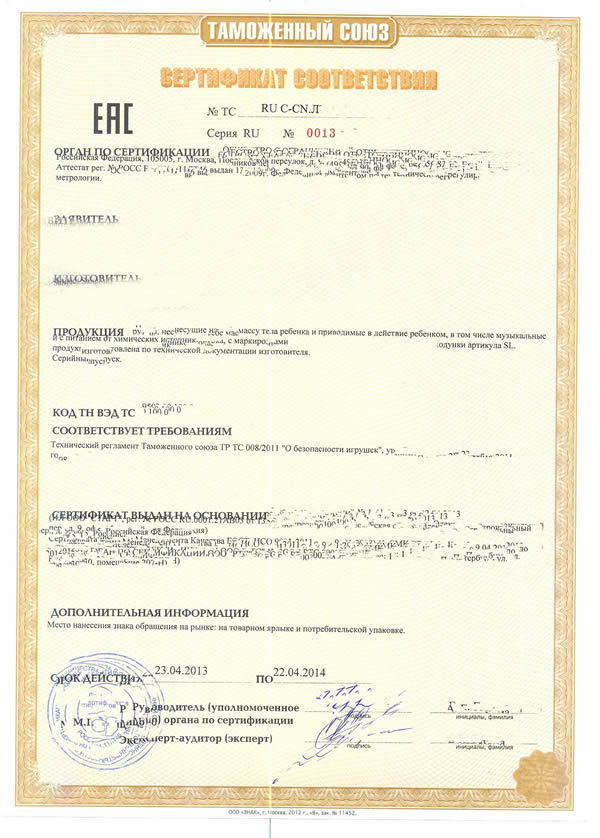
The EX EAC certificate and the regulation for equipment used in potentially explosive atmosphere, therefore classified explosion proof, is based on the Technical Regulations 012/2011 of the Eurasian Customs Union (TR CU 012/2011), one of the EAC Technical Regulations in force since 2012.
The Custom Union Technical Regulations regulate the quality of the product on the markets of Russia, Belarus, Kazakhstan and soon of Armenia and Kyrgyzstan. The certificate resulting from the compliance with the provisions of the TR CU 012/2011 is the EX EAC certificate, comparable to European ATEX.
The regulation sets the safety standards for devices and equipment used running in potentially explosive atmospheres.
EX EAC certificate: products subject to the legislation for the safety of appliances in explosive atmosphere

The TR CU 012/2011 EAC is addressed both to electrical devices and their components and to equipment not running on electrical power.
The identification of products meeting the specifications listed in the regulation is done through the presence hte Ex marking, placed on the product and on the product documentation. The EX mark result in the name “Certificate EAC EX” which for instance refers to the EAC certificate of the unified regulations of the Customs Union which Russia, Belarus and Kazakhstan are part with a joint certification system, whereas EX refers to the explosion safety features of the product.
In contrast with the ATEX directive, the EAC TR CU 012/2011 does not apply to devices for medical use.
Ask for an offer or more information!
It is important to note that the certification in accordance with the Technical Regulations 012/2011 EAC is to be achieved on both the sold devices and all the components giving the equipment the special properties. This procedure allow the device to be in potentially explosive atmospheres, and it is to be performed if the components have not been previously certified under the Regulation of the Custom Union.
The certification process depending on the type of product and the temporal validity of the certificate may vary. Furthermore different procedures may be required for single export certificate and longer terms up to a maximum of 5 years. Very often it requires an inspection at the manufacturing plant or specific tests on samples of the equipment, as well as extensive documentation in Russian language.
+44 203 630 13 04
+49 891 437 75 12
+7 499 653 52 59
+33 176 541 958
+39 02 947 509 21
+39 051 95 27 070
+34 911 798 351


Timing and Costs of EX EAC certificate for hazardous atmospheres according to TR CU 012/2011
Issuing time from the delivery of all the required documents: 2 to 8 weeks
Total cost: from 2500 Euro
Validity: single shipment, up to 5 years
Costs may vary depending on the time validity request, the product to be certified and the number of product variants, or different products if considered similar.

Mandatory sample importation for EAC certifications
Many businesses, large and small, have a huge source of great ideas that can help them improve, innovate, and grow, and yet so many of these companies never think of using this amazing corporate asset. What is this highly valuable asset? Its own people.
10 April 2019
TR CU 010/2011 on the safety of machinery and equipment
Many businesses, large and small, have a huge source of great ideas that can help them improve, innovate, and grow, and yet so many of these companies never think of using this amazing corporate asset. What is this highly valuable asset? Its own people.
11 October 2017
EAC Certificate and EAC Declaration: what to choose and when?
Many businesses, large and small, have a huge source of great ideas that can help them improve, innovate, and grow, and yet so many of these companies never think of using this amazing corporate asset. What is this highly valuable asset? Its own people.
22 January 2016
EAC technical regulations schedule
TR CU 006/2011 on the safety of fireworks;
TR CU 019/2011 on the safety of personal protective equipment;
TR CU 005/2011 on the safety of the packaging;
TR CU 007/2011 on product safety for children and teenagers;
TR CU 008/2011 on the safety of toys;
TR CU 009/2011 on the safety of perfumery and cosmetics;
TR CU 017/2011 on the safety of products of light industry (clothing);
TR CU 013/2011 on the quality of the automotive and aviation fuel, gasoline, diesel and marine fuel, jet fuel and fuel oil;
TR CU 004/2011 on the safety of low voltage equipment;
TR CU 010/2011 on the safety of machinery and equipment;
TR CU 011/2011 on the safety of lifts;
TR CU 012/2011 on the safety of equipment for potentially explosive atmospheres;
TR CU 016/2011 on the safety of machines operating on gaseous fuel;
TR CU 020/2011 on electromagnetic compatibility of technical devices;
TR CU 015/2011 on the safety of grain;
TR CU 021/2011 on food safety;
TR CU 022/2011 on the rules of marking on food products;
TR CU 023/2011 for fruit juices and products derived from fruits and vegetables;
TR CU 024/2011 for products obtained from animal and vegetable fats and oils;
TR CU 027/2012 on dietetic foods, including dietary foods for special medical purposes;
TR CU 029/2012 on the safety of food additives, flavorings and processing aids;
TR CU 026/2012 on the safety of vessels up to 20 meters;
TR CU 032/2013 on the safety of pressure equipment;
TR CU 030/2012 oils and greases, lubricants and special fluids;
TR CU 033/2013 on the safety of milk and dairy products;
TR CU 034/2013 on the safety of meat and meat products;
TR CU 025/2012 on the safety of furniture and furnishings;
TR CU 028/2012 on the safety of explosive material and explosive-based products;
TR CU 001/2011 on the safety of railway rolling stock;
TR CU 002/2011 on the safety of high-speed rail transport;
TR CU 003/2011 on the safety of rail infrastructure;
TR CU 018/2011 on the safety of motor vehicles;
TR CU 014/2011 on road safety.
TR CU 031/2012 on the safety of agricultural and forestry tractors and their trailers.