
 Deutsch
 Español
  Français
 Italiano
 Русский
 简体中文
简体中文EAC Certification 2026: Comprehensive Guide for Russia & EAEU


Depending on the type of product and its risk level, the legislation provides for two distinct forms of certification:
The EAC Certificate of Conformity: Issued by an accredited certification body following laboratory tests and audits. It is mandatory for products considered “high risk” (e.g., hazardous machinery, toys, children’s clothing).
The EAC Declaration of Conformity: An officially registered self-declaration where the responsibility for compliance rests with the applicant. It is essential to remember that, by law, the applicant must always be a legal entity registered within the territory of the Union (your importer or an Authorized Representative).
Fundamental Compliance & Validity
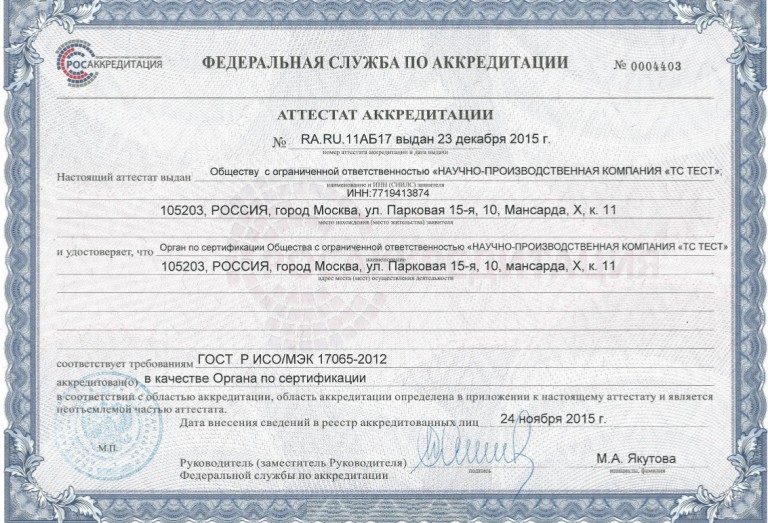
The issuance of EAC documents is managed by private certification bodies accredited by national authorities like Rosakkreditatsiya. TechSert Group operates its own accredited body for direct issuance.
It depends on the risk level. The Certificate is for high-risk goods (machinery, toys) and requires factory audits. The Declaration is for lower-risk goods (food, industrial parts) where the applicant takes legal responsibility.
Validity ranges from 1 to 5 years. Certificates for serial production require mandatory annual surveillance audits. Failure to perform these leads to immediate suspension in the state registry.
EAC covers 90% of products today. GOST R is only required for a residual list of goods not yet regulated by the unified Eurasian Technical Regulations (TR CU).
Labeling, Translations & QR Codes
No. European or American certifications have no legal value in the EAEU. You must undergo the EAC process and apply the EAC logo to your products.
Yes. All labels, technical nameplates, and user manuals must be translated into Russian. In some cases, like Kazakhstan, the local language is also required.
The Chestny Znak is a track-and-trace system. For items like clothing, shoes, and electronics, you must apply a DataMatrix QR code provided by your importer before the goods cross the border.

Logistics, Samples & Applicants
No. The applicant (Zayavitel) must be an EAEU-resident legal entity. We provide Applicant Services (Authorized Representative) to hold the certificate on your behalf, keeping you independent from your distributors.
Yes. Since 2018, authorities cross-check the Customs Declaration of Samples (GTD). If you cannot prove the samples were shipped for testing, the certificate is considered “fake” and will be annulled retroactively.
Large equipment can be shipped under a special customs procedure. You present proof that the certification process is underway, allowing the goods to enter for installation and final onsite testing.
Technical Files & Industrial Standards
For TR CU 010 (Machinery), the Safety Case is a mandatory risk analysis document that must accompany the technical passport and user manual.
You must provide collection photos, a detailed material composition (percentages), and Russian labels. Lab tests will verify hygiene and safety standards.
In TR CU 010 (Machinery), certified machines often cover their components. However, for TR CU 012 (Explosion Proof) and TR CU 032 (Pressure), individual components must often hold their own specific EAC certificates.
Sanctions & 2026 Export Feasibility
In 2026, technical compliance is secondary to export feasibility. We perform a preliminary check of your HS codes to ensure the product is not restricted under European or international sanctions (Dual-Use).
EAC and Gost Certification News

Exporting to Russia 2026: Strategic Non-Sanctioned Key Sectors
Many businesses, large and small, have a huge source of great ideas that can help them improve, innovate, and grow, and yet so many of these companies never think of using this amazing corporate asset. What is this highly valuable asset? Its own people.
10 March 2026
EAC Certificate or Declaration? The Complete 2026 Guide to Eurasian Compliance
Many businesses, large and small, have a huge source of great ideas that can help them improve, innovate, and grow, and yet so many of these companies never think of using this amazing corporate asset. What is this highly valuable asset? Its own people.
10 February 2026
The EAC certifications for the Oil & Gas sector in the Eurasian Economic Union
Many businesses, large and small, have a huge source of great ideas that can help them improve, innovate, and grow, and yet so many of these companies never think of using this amazing corporate asset. What is this highly valuable asset? Its own people.
27 October 2025Mandatory sample importation for EAC certifications
Many businesses, large and small, have a huge source of great ideas that can help them improve, innovate, and grow, and yet so many of these companies never think of using this amazing corporate asset. What is this highly valuable asset? Its own people.
10 April 2019
EAC and Gost Certifications by Product

china@gostrussia.com
india@gostrussia.com
+44 203 630 13 04
+49 891 437 75 12
8 800 500 31 57
+39 02 947 509 21
+34 911 798 351